

Guiding Children to Read, Write, and Speak the Language of Music Through Rhythm
Musicology Lab provides professional learning that helps schools and programs offer real music
literacy — without requiring a full-time music specialist.
Our training equips classroom educators to guide children in reading, writing, and speaking music, beginning with rhythm as a musical language and building foundational understanding that supports later performance and instrument study.
This work is designed to live inside real classrooms, real schedules, and real institutional constraints — so every child has access to meaningful music learning.
Any teacher. Every child.
WHY TEACHER TRAINING MATTERS
Many preschools and early learning programs are expected to offer music education — yet most
cannot hire a full-time music specialist.
Staffing models vary. Budgets are limited. Schedules are full.
As a result, music instruction is often inconsistent, dependent on individual comfort levels, or
available only in select classrooms.
Teacher training offers a practical response to this reality.
By equipping classroom educators to teach rhythm-based music literacy, schools create shared
understanding, continuity, and access — regardless of staffing structure or program size.
Music learning no longer depends on who happens to be available.
It becomes part of the classroom culture.
This approach allows schools to offer music education that is:
● consistent across classrooms
● respectful of real-world constraints
● accessible to all children, not just a few
Training classroom educators is not about asking teachers to do more.
It is about giving them clarity, structure, and confidence — so music learning can live where children already are.
WHY RHYTHM COMES FIRST
Music is a language.
We teach children to speak it.
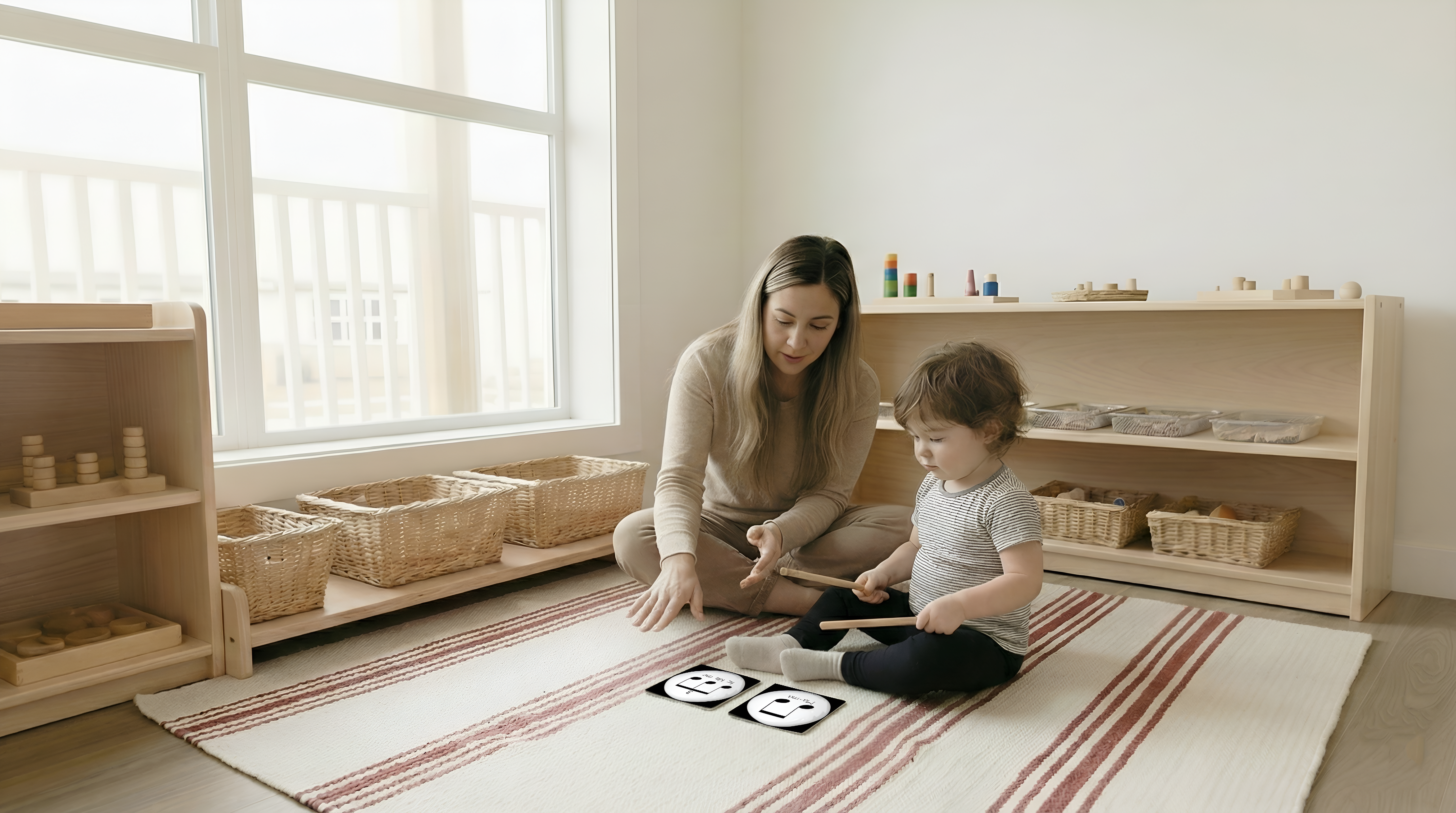
Just as spoken language begins with sound and rhythm long before reading and writing, music
literacy begins with rhythm — felt in the body, spoken aloud, and understood as meaningful pattern.
Early childhood is a period when rhythm is absorbed most naturally. During these years, children
internalize beat, timing, and pattern with the same ease they acquire spoken language. When rhythm is introduced at this stage, music learning becomes intuitive rather than effortful.
We do not rush reading.
We prepare the brain for it.
By learning to see, say, and play rhythm first, children develop musical understanding that supports future reading, writing, and performance — on any instrument they later choose to study.
Rhythm-first music literacy prepares children for future instrument study by giving them the
understanding that specialists build upon later.
This approach honors how children actually learn:
through movement before abstraction
through sound before symbols
through meaning before memorization
When rhythm carries meaning, music becomes a second language — one children understand,
express, and retain.
Before formal instruments. Before formal performance.
This is how children build true musical literacy — with confidence, clarity, and joy — during the years when learning comes most naturally.
WHAT THE TRAINING LOOKS LIKE
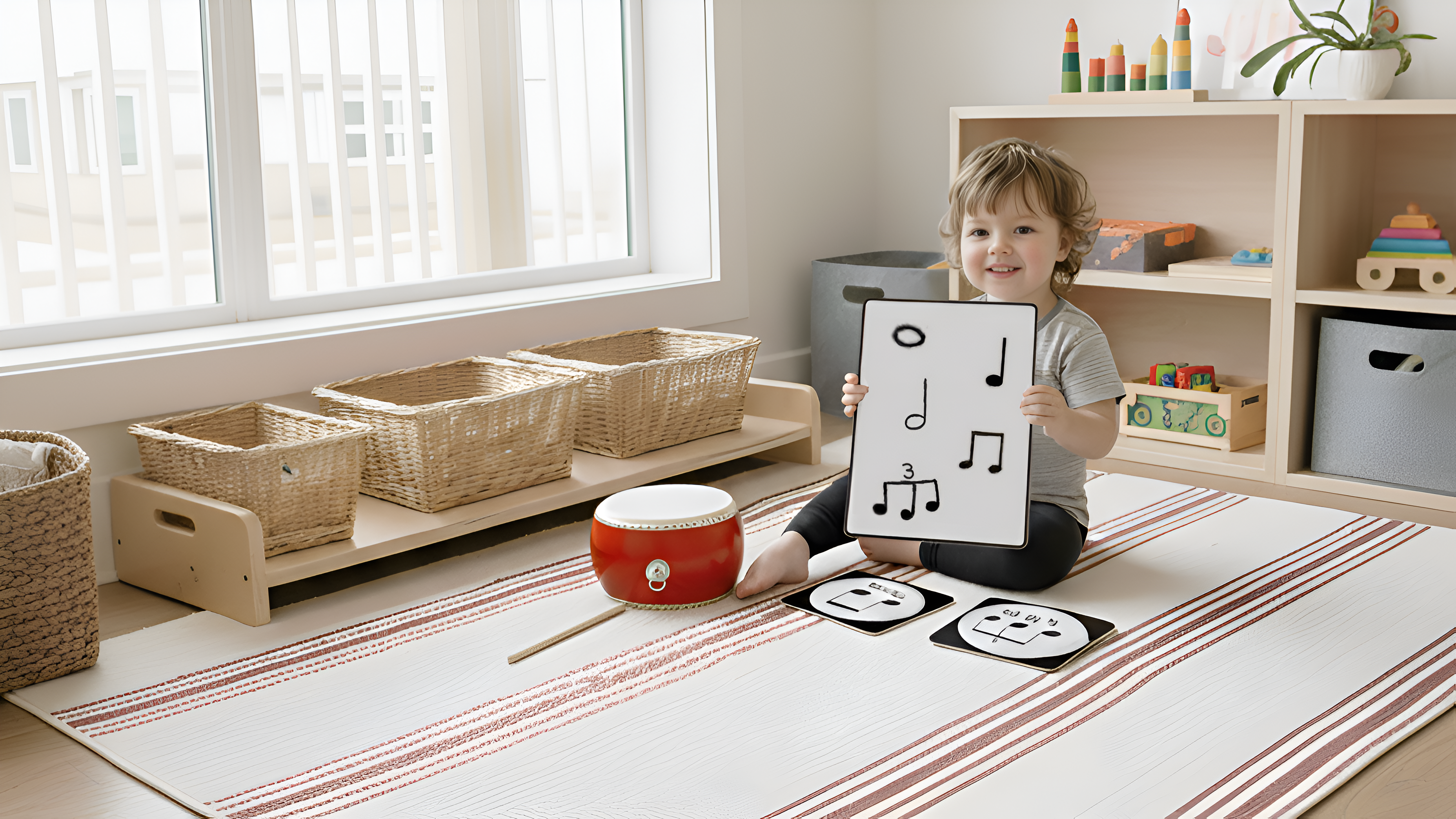
Musicology Lab teacher training is designed to fit real classrooms, real schedules, and real staffing models.
Training is available in person or online, and can be delivered to:
● small teaching teams
● full-school staffs
● large professional development groups
Formats are flexible and include:
● 60–90 minute professional learning sessions
● Extended interactive workshops (up to 3 hours) for larger teams or deeper implementation
Sessions are designed for classroom educators, therapists, and early childhood staff, including those without musical backgrounds.
The training:
● requires no instruments
● has no performance expectations
● does not require teachers to read music
● integrates into existing classroom routines
Educators leave with a clear, developmentally aligned approach they can begin using immediately —supported by simple language, structured rhythm sequences, and practical classroom application.
This work is designed to scale without adding complexity, staffing, or disruption.
NEXT STEP
For programs seeking a way for any teacher to bring music literacy into the classroom guiding children to read, write, and speak the universal language of music — the next step is a short implementation discussion.
These discussions are for school leaders and program directors exploring whether rhythm-first music literacy training is the right fit for their educators, their classrooms, and their long-term vision for early learning.
To protect the quality and care of this work, training is offered to a limited number of schools each year. Implementation is paced intentionally, with direct involvement and support.
Our teacher training is supported by classroom-based rhythm materials designed for non-musical educators to use confidently in real classrooms.
The Musicology Lab Learning System is the culmination of over a decade of dedicated research and insights from more than 2,000 students across 11 Montessori and music schools in Dallas and Dubai. Drawing from this wealth of experience, we have crafted a comprehensive curriculum kit series designed for both home and school use. Soon to be available in multiple languages, this innovative system will bring the joy of music education to schools worldwide.
OUR APPROACH
Musicology Lab Benefit
Company Overview